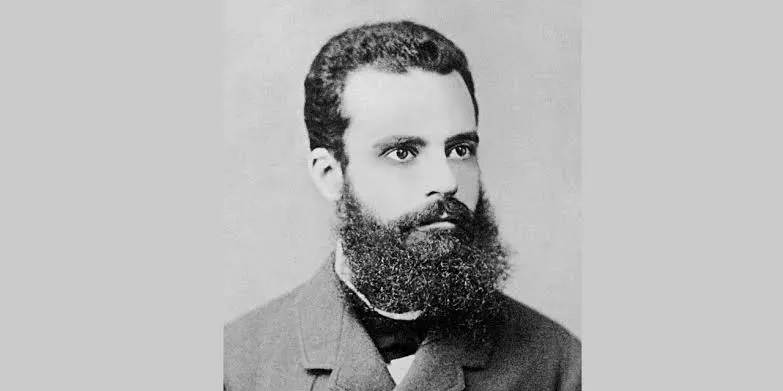
Vilfredo Pareto — 20% Effort Creates 80% Results—Find Your 20%
THE DISCOVERY THAT CHANGED EVERYTHING
Italy, 1896. An economist named Vilfredo Pareto was studying wealth distribution in his country when he noticed something peculiar.
80% of Italy’s land was owned by 20% of the population.
Interesting, but not shocking. Wealth inequality wasn’t new.
But then Pareto kept digging. And what he found wasn’t just about wealth—it was a fundamental law of nature that applied to almost everything:
- 80% of the peas in his garden came from 20% of the pods
- 80% of effects come from 20% of causes
- 80% of outputs come from 20% of inputs
He had discovered what would become known as the Pareto Principle—or the 80/20 Rule.
Over the next century, this pattern appeared everywhere:
- 80% of sales come from 20% of customers
- 80% of complaints come from 20% of clients
- 80% of results come from 20% of efforts
- 80% of scientific breakthroughs come from 20% of experiments
- 80% of wealth is created by 20% of businesses
This isn’t motivational theory. This is mathematics.
And it proves what Steve Jobs intuitively knew: most of what you do doesn’t matter.
THE BRUTAL MATHEMATICAL TRUTH
Let me show you something that will either liberate you or terrify you.
80% of what you’re doing right now is producing almost nothing.
Not “not much.” Almost nothing.
This is math, not opinion. The Pareto distribution shows up in nature, economics, business, and human behavior with remarkable consistency.
20% of your effort → 80% of your results
20% of your time → 80% of your output
20% of your inputs → 80% of your outcomes
Which means:
80% of your effort → 20% of your results
80% of your time → 20% of your output
80% of your inputs → 20% of your outcomes
The ratio isn’t equal. It’s not 50/50. Some activities are literally 16 times more valuable than others.
Think about that. If you spend an hour on a vital activity, it produces 16 times the result of an hour spent on a trivial activity.
You’re spending 80% of your time on activities that produce 6.25% of the return per hour compared to your vital activities.
WHY MOST PEOPLE GET THIS WRONG
You might be thinking: “Okay, I get it. Some things matter more than others.”
But you don’t act like you get it.
Because if you truly understood the 80/20 Principle, you would:
- Spend 80% of your time on the vital 20%
- Minimize or eliminate the trivial 80%
- Constantly audit to ensure you’re focused on what matters
Instead, most people do the opposite:
- Spread their time equally across all activities
- Treat all tasks as equally important
- Never stop to identify what actually produces results
This is why smart, hardworking people produce mediocre results while seemingly lazy people who focus ruthlessly produce exceptional results.
It’s not talent. It’s not intelligence. It’s not work ethic.
It’s understanding where results actually come from.
THE TWO CRITICAL QUESTIONS
The 80/20 Principle forces you to ask two questions about everything in your life:
Question 1: “What is my vital 20%?”
This isn’t asking what you do. It’s asking what produces results.
In any domain of your life, 20% of your inputs create 80% of your outputs.
The question is: Do you know which 20%?
Most people don’t. They’ve never audited their activities to identify what actually moves the needle.
They work 50 hours but couldn’t tell you which 10 hours actually mattered.
They have 30 relationships but couldn’t tell you which 6 actually support their growth.
They own 200 items but couldn’t tell you which 40 they actually use.
You cannot focus on your vital 20% if you don’t know what it is.
Question 2: “Why am I still doing the trivial 80%?”
Once you identify your vital 20%, this question becomes unavoidable.
If 80% of your activities produce only 20% of your results, why are you doing them?
The usual answers:
- “Because I have to”
- “Because it might matter someday”
- “Because everyone else does it”
- “Because I’ve always done it”
None of these are good reasons.
The truth is simpler and harder: you’re doing the trivial 80% because you haven’t had the courage to stop.
THE PARETO AUDIT: FINDING YOUR 20%
You can’t eliminate what you haven’t identified. So before you can focus on your vital 20%, you must discover what it is.
Here’s how:
Step 1: List Your Activities
For each major domain of your life, write down everything you’re currently doing.
Don’t edit. Don’t judge. Just list.
Work domain: Every type of task, meeting, project, email you handle
Relationship domain: Every person you interact with regularly
Learning domain: Every course, book, podcast, article you consume
Health domain: Every habit, exercise, diet approach you practice
Material domain: Every possession you own and maintain
This exercise alone is illuminating. Most people have never listed everything they’re doing. Seeing it on paper is shocking.
Step 2: Measure Results
Now comes the hard part: for each activity, honestly assess its results.
Work: Which tasks actually moved projects forward? Which meetings produced decisions? Which emails changed outcomes?
Relationships: Which people actually energized you? Which conversations led to growth? Which interactions brought genuine joy?
Learning: Which content did you actually apply? Which insights changed your behavior? Which knowledge produced tangible results?
Health: Which habits actually improved your energy? Which exercises made you stronger? Which dietary choices made you feel better?
Material: Which possessions did you actually use? Which items added genuine value? Which belongings served a real purpose?
Most activities will show minimal or zero measurable results. That’s the point.
Step 3: Identify the Vital 20%
Look at your lists. Circle the activities that produced genuine, measurable results.
Be ruthless. Be honest.
If you’re not sure whether something belongs in your vital 20%, it doesn’t.
Your vital 20% should be obvious. These are the activities that clearly moved the needle. The relationships that obviously matter. The learning that you actually applied. The possessions you definitely use.
Everything else is your trivial 80%.
Step 4: Calculate the Gap
Now do the math.
What percentage of your time are you spending on your vital 20% versus your trivial 80%?
For most people, the numbers are shocking:
- Spending 20% of time on vital activities, 80% on trivial
- Or worse: spending 10% on vital, 90% on trivial
You’ve identified your 20%. Now you’re spending 80% of your time on everything BUT that 20%.
This is why you’re overwhelmed but unproductive. Busy but stuck. Working hard but going nowhere.
THE DOUBLE 80/20: GOING DEEPER
Here’s where the Pareto Principle becomes truly powerful:
You can apply it twice.
First application: 20% of your activities produce 80% of your results.
Second application: Within that vital 20%, another 20% produces 80% of THOSE results.
The math:
- 20% of 20% = 4%
- 80% of 80% = 64%
This means 4% of your activities produce 64% of your results.
Let’s make this concrete:
If you have 25 work tasks:
- 5 tasks (20%) produce 80% of results
- Within those 5, the top 1 task (4% of total) produces 64% of results
If you have 30 regular activities:
- 6 activities (20%) produce 80% of value
- Within those 6, the top 1-2 activities (4% of total) produce 64% of value
One or two activities out of thirty are producing nearly two-thirds of your results.
What if you spent half your time on those one or two activities instead of spreading yourself across thirty?
This is how extraordinary performers operate. They find the 4% and build their life around it.
WHY YOU RESIST THIS
You know the 80/20 Principle makes sense. The math is undeniable. So why aren’t you living it?
Resistance 1: The Guilt of Waste
You’ve invested in the trivial 80%. Money, time, effort.
“But I spent money on that course.”
“But I’ve been working on this project for months.”
“But I already bought all this stuff.”
Sunk cost is sunk. The money is gone whether you continue or quit. The time is spent whether you keep going or stop.
Continuing to invest in the trivial 80% doesn’t recover your past investment. It just wastes your future.
Resistance 2: The Illusion of Necessity
You think everything matters.
“I have to answer every email.”
“I have to attend every meeting.”
“I have to maintain every relationship.”
“I have to complete every commitment.”
No, you don’t.
What you have to do is produce results. And the 80/20 Principle proves that most of what you’re doing doesn’t produce results.
The question isn’t “Do I have to do this?” The question is “Does this produce results?”
Resistance 3: The Fear of Simplification
Focusing on 20% feels too simple.
It can’t be that easy, right? Success must be more complicated.
But Pareto’s data shows otherwise. Results come from focused effort on the vital few, not scattered effort across everything.
Simple doesn’t mean easy. It means clear.
And most people prefer complicated busyness over simple focus because busyness feels safer.
Resistance 4: The Identity Crisis
You’ve built an identity around doing everything.
“I’m the person who says yes.”
“I’m the person who’s always busy.”
“I’m the person who juggles it all.”
Focusing on 20% means becoming someone else:
“I’m the person who says no.”
“I’m the person who’s strategically focused.”
“I’m the person who does less, better.”
Changing behavior means changing identity. And that’s scary.
THE PARETO PROTOCOL
Here’s how to implement 80/20 thinking starting today:
Protocol Step 1: Audit (This Week)
Complete the Pareto Audit outlined earlier for one domain of your life.
Pick the domain causing you the most overwhelm:
- Work (tasks, projects, meetings)
- Relationships (people, groups, obligations)
- Learning (courses, books, content)
- Material life (possessions, subscriptions, commitments)
List everything. Measure results. Identify your vital 20%.
One domain. One week. Complete the audit.
Protocol Step 2: Protect (Next Week)
Once you’ve identified your vital 20%, protect it fiercely.
Schedule your vital 20% first. Give it your best time, highest energy, complete focus.
Your vital 20% is not what you do “if you have time.” It’s what you do first, every time.
Block calendar time for your vital activities.
Say no to anything that interferes with them.
Treat them as non-negotiable.
Protocol Step 3: Minimize (Following Two Weeks)
Now address the trivial 80%.
You don’t have to eliminate everything immediately. But you must minimize it.
Delegate: Can someone else do this?
Automate: Can a system handle this?
Eliminate: Can you simply stop doing this?
Batch: Can you do this once a week instead of daily?
The goal: reduce time spent on trivial 80% from 80% of your time to 20% of your time.
Protocol Step 4: Re-audit (Monthly)
Your vital 20% changes as you grow.
What mattered last quarter might not matter this quarter.
What was vital at your last level might be trivial at your new level.
Every month, re-run the audit. Confirm you’re still focused on what produces results.
THE TRANSFORMATION
Let me show you what happens when you actually live 80/20:
Before 80/20
- Spending 80% of time on trivial activities
- Producing 20% of potential results
- Feeling busy but stuck
- Making minimal progress on anything
After 80/20
- Spending 80% of time on vital activities
- Producing 80% of potential results
- Feeling focused and effective
- Making rapid progress on what matters
You don’t work more hours. You produce 4x the results.
That’s not magic. That’s mathematics.
YOUR VITAL 20% EXERCISE
Before you turn to Chapter 3, complete this exercise:
Choose one domain of your life. Complete the Pareto Audit for that domain today.
List all activities. Measure results. Circle your vital 20%.
Then answer these questions:
- What is my vital 20% in this domain?
- What percentage of my time currently goes to this vital 20%?
- What is one activity from my trivial 80% I can eliminate this week?
Do the audit. Find your 20%. Write it down.
Because in Chapter 3, you’ll learn Warren Buffett’s ruthless system for avoiding the “good” opportunities that destroy your focus on the great ones.
But first, identify your vital 20%.
Do it now.
“There is nothing so useless as doing efficiently that which should not be done at all.”
— Peter Drucker
Leave a Reply