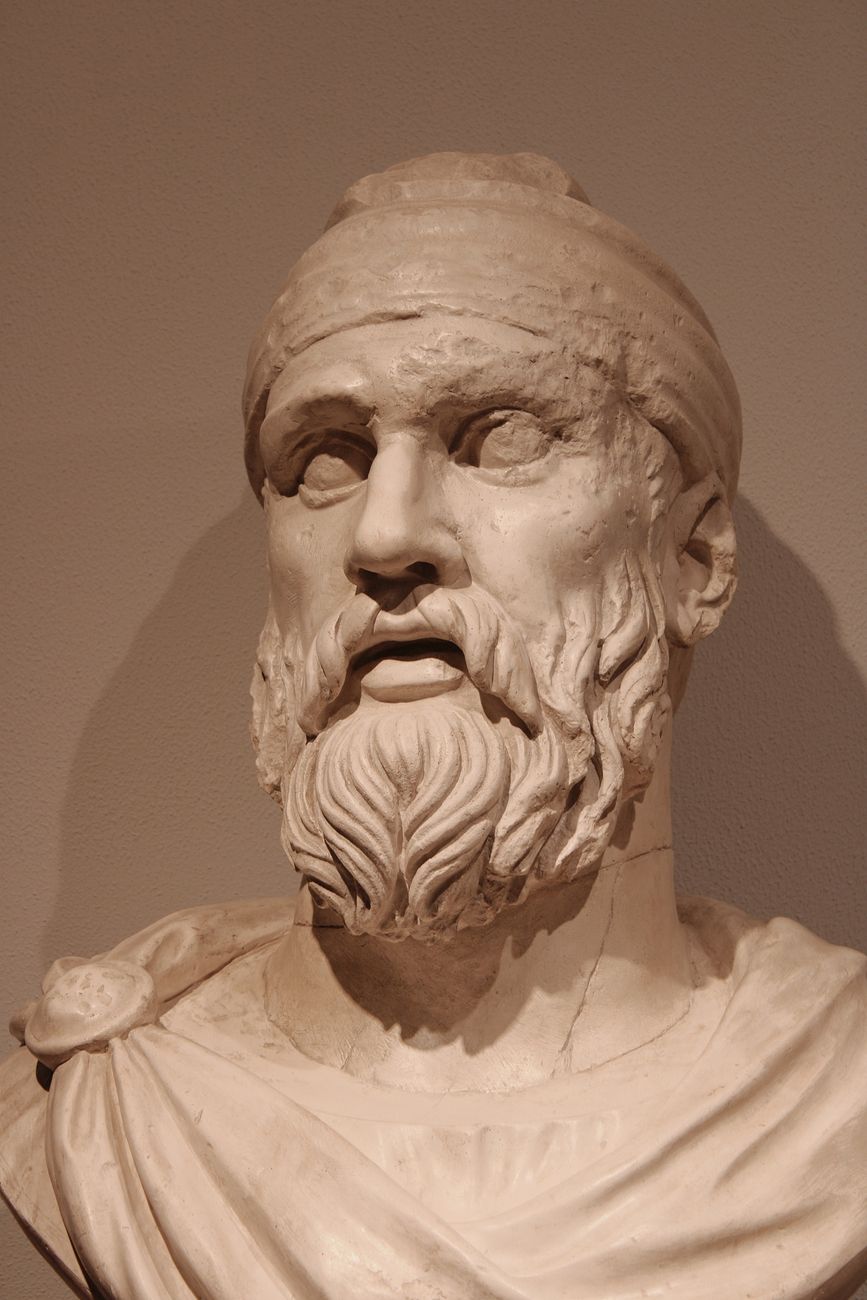
Zeno of Citium (c. 334–262 BCE)
Zeno of Citium was a Greek philosopher and the founder of Stoicism, one of history’s most influential schools of philosophy. After arriving in Athens, he began teaching in the Stoa Poikile, or “Painted Porch,” from which Stoicism took its name. His philosophy emphasised living according to nature and reason, developing virtue, mastering destructive passions and accepting what cannot be changed. None of his original writings survive, so his ideas are known mainly through later ancient sources.
Core ideas: Virtue · Reason · Self-Control · Living According to Nature · Courage · Justice · Acceptance · Wisdom · Inner Freedom · Resilience
1. Virtue Is the Foundation of a Good Life
Zeno taught that external success alone cannot create a truly good life. Wealth, health and reputation may be desirable, but they are unstable. What matters most is how you use whatever life gives you. Wisdom, courage, justice and self-control form character. Build your happiness on these qualities, because circumstances can change, but character remains your responsibility.
2. Live According to Nature
For Zeno, living according to nature meant living in harmony with human reason and the larger order of reality. Do not constantly fight facts you cannot change. Understand your nature as a rational and social being. Use reason, cooperate with others and accept reality before deciding how to act. A wise life begins by seeing the world clearly.
3. Use Reason Before Emotion Takes Control
Emotions can provide important signals, but impulsive reactions can lead to harmful choices. Zeno’s Stoicism emphasised examining our judgments before acting. When anger, fear or desire becomes intense, pause. Ask whether your interpretation is accurate and whether your next action is wise. You may not control every feeling, but you can develop greater awareness of what you choose to do.
4. Character Is More Valuable Than Possessions
You can lose money, status and property without losing your ability to act with integrity. Zeno distinguished between what is truly good—virtue—and external things that can be used well or badly. Enjoy comfort without becoming dependent on it. Build the part of your life that cannot simply be purchased: wisdom, courage, fairness and self-control.
5. Accept What You Cannot Change
Resistance to reality often creates unnecessary suffering. If something cannot be changed, wishing endlessly for a different past will not alter it. Acceptance does not mean liking injustice or refusing to improve circumstances. It means beginning with facts. Once you accept what is real, you can direct your energy toward what remains possible rather than wasting it fighting the impossible.
6. Train Your Desires
An uncontrolled desire can make you dependent on whatever you want. Zeno’s Stoicism encourages discipline over appetite and impulse. Ask whether a desire serves your life or controls it. You do not need to satisfy every craving immediately. The ability to pause creates freedom. A person who governs their desires is less easily manipulated by pleasure, fear or temptation.
7. Do Not Fear Discomfort
A life organised entirely around comfort can make even small difficulties feel unbearable. Stoic discipline develops resilience by teaching us that discomfort is not automatically disaster. You can tolerate inconvenience, uncertainty and effort. This does not mean seeking suffering for its own sake. It means becoming strong enough that temporary discomfort does not immediately control your decisions.
8. Happiness Does Not Depend on Constant Pleasure
Pleasure can be enjoyable, but it comes and goes. Zeno’s philosophy sought a deeper stability based on virtue and wise judgment. If happiness depends entirely on feeling good, every painful experience becomes a threat. A meaningful life can include difficulty, effort and sacrifice. Ask not only, “Does this feel good now?” but also, “Does this help me live well?”
9. Courage Means Acting Despite Fear
Courage is not the complete absence of fear. It is the ability to act according to reason and principle even when fear is present. You may fear failure, rejection or loss, but these fears should not automatically decide your actions. Examine what is truly required of you. Then take the necessary step rather than allowing imagined consequences to control your entire life.
10. Justice Is a Personal Responsibility
Zeno considered justice one of the essential virtues. A good society cannot exist if individuals care only about personal advantage. Treat others fairly even when unfairness would benefit you. Honour agreements, respect human dignity and avoid using people merely as tools for your own goals. Justice begins in ordinary decisions long before it appears in laws or courts.
11. Self-Control Creates Freedom
People often imagine freedom as doing whatever they want. Stoicism offers another definition: freedom includes not being ruled by destructive impulses. If anger controls your speech or desire controls your choices, you are not entirely free. Discipline creates options. When you can pause and choose rather than automatically react, you become more capable of directing your own life.
12. Your Judgments Shape Your Experience
The same event can be interpreted differently by different people. Zeno’s Stoic tradition placed great importance on examining judgments before giving complete emotional approval to them. Ask: What actually happened? What am I assuming? Is there another explanation? Clear thinking cannot remove every hardship, but it can prevent imagination and false assumptions from adding unnecessary suffering.
13. Do Not Let Pleasure Become Your Master
Pleasure is not necessarily evil, but dependence on pleasure can weaken judgment. If you cannot tolerate boredom, discomfort or delayed gratification, you become easier to control. Learn to enjoy good things without believing you cannot live without them. The goal is not a joyless life. It is the freedom to choose wisely even when immediate pleasure points elsewhere.
14. Every Person Belongs to a Larger Human Community
Stoic thought developed the idea that human beings belong to a wider community, connected through shared rational and social capacities. Your actions affect more than yourself. Consider the common good alongside personal gain. Treat strangers with dignity. A meaningful life is not built solely around “What do I want?” but also around “What do I owe others?”
15. Do Not Judge Success Only by Results
You can make a wise decision and still experience an unfavourable outcome. You can also act badly and be temporarily rewarded. Zeno’s philosophy directs attention toward the quality of your choices. Focus on preparation, integrity and effort. Learn from results, but do not define your entire worth by outcomes that depend partly on circumstances beyond your control.
16. Prepare Your Mind Before Difficulty Arrives
Resilience is easier to develop before a crisis than during one. Practise patience during small frustrations. Learn to tolerate inconvenience. Reflect on how you would respond if plans changed. This does not require living in fear of disaster. It means strengthening your mind during ordinary life so that unexpected hardship does not find you completely unprepared.
17. Speak With Purpose
Words can educate, encourage, deceive or destroy. A Stoic should not speak merely to display intelligence or dominate every conversation. Before speaking, ask whether your words are true, useful and appropriate. Listen carefully. Silence can prevent unnecessary conflict and help you understand more. Wisdom is not demonstrated by always having something to say.
18. Do Not Be Controlled by Reputation
Public opinion changes quickly. Praise can become criticism, and admiration can disappear. If your peace depends entirely on reputation, other people gain excessive power over your mind. Protect your character rather than constantly managing your image. Seek a good reputation through good conduct, but do not sacrifice your principles simply to remain popular.
19. Simplicity Strengthens Independence
The more unnecessary things you believe you need, the more easily their absence can disturb you. Simplicity teaches that happiness does not require endless possessions or luxury. Enjoy comfort when available, but remember you can live without many things society presents as essential. A simpler life can create more freedom, gratitude and attention for what genuinely matters.
20. Do Not Waste Energy on What Is Beyond You
You cannot change the past through worry or control every future event through anxiety. Zeno’s Stoic approach encourages directing effort where it can actually make a difference. Before becoming consumed by a problem, ask: Can I influence this? If yes, act. If not, work on acceptance and your response. Wisdom includes knowing where your energy belongs.
21. Become Less Dependent on Fortune
Good fortune can bring wealth, success and comfort; bad fortune can remove them. A stable life cannot depend entirely on luck. Zeno encourages building inner resources that remain useful in changing circumstances. Knowledge, courage, discipline and integrity may not prevent every loss, but they help you respond without losing your entire sense of self.
22. Learn From Everyone
Wisdom is not limited to famous teachers or powerful people. Every person and experience can reveal something if you observe carefully. Learn from another person’s success without envy and from their mistakes without arrogance. Remain humble enough to revise your beliefs. The person convinced they already know everything has closed the door to further growth.
23. Make Your Life Consistent With Your Values
A philosophy has little value if it remains only an idea. Zeno founded a way of life that demanded practice. If you claim to value honesty, practise it when lying would be easier. If you value courage, act when fear appears. Your true beliefs become visible through repeated behaviour. Let your daily actions match the principles you publicly admire.
24. Inner Peace Requires Practice
Peace is not simply a personality trait or lucky circumstance. It can be cultivated through reflection, discipline and repeated correction. You will still experience anger, fear and disappointment, but you can become less controlled by them. Notice your reactions, examine your judgments and practise better responses. A calm mind is often the result of training, not accident.
25. The Greatest Victory Is Self-Mastery
Zeno’s deepest lesson is that conquering external things is less important than governing yourself. You may gain influence over others while remaining a prisoner of anger, greed, fear or ego. True strength begins when your reason and values guide your actions more than temporary impulses. The most important person you will ever learn to lead is yourself.
Leave a Reply